

Have you ever wondered what the real connection between links and SEO is? If you look at any top-ranking website, you’ll notice that links are everywhere. They’re not there by accident. Some types of links help your pages rank higher, while others do very little, and some can even hurt you if you overuse them. Whether you manage your own website or work with an SEO agency in Thailand, understanding how links work is essential.
In this guide, we’ll walk through the main types of links that matter for SEO, including internal links, external links, and different types of backlinks, and explain how each one affects your search rankings.
What Are Links in SEO?
A link is defined as a relationship or association between two or more things, and in this case, web pages. Simply put, links are used to connect one web page to the next. Alternatively, you can also refer to it as something that, when clicked on, leads you to another page. Links can occur as videos, images, or texts.
Internal vs External Links
When it comes to link placement and link-building strategies in a website, you will find that there are two main types of links:
- Internal links
- External links
1. Internal Links
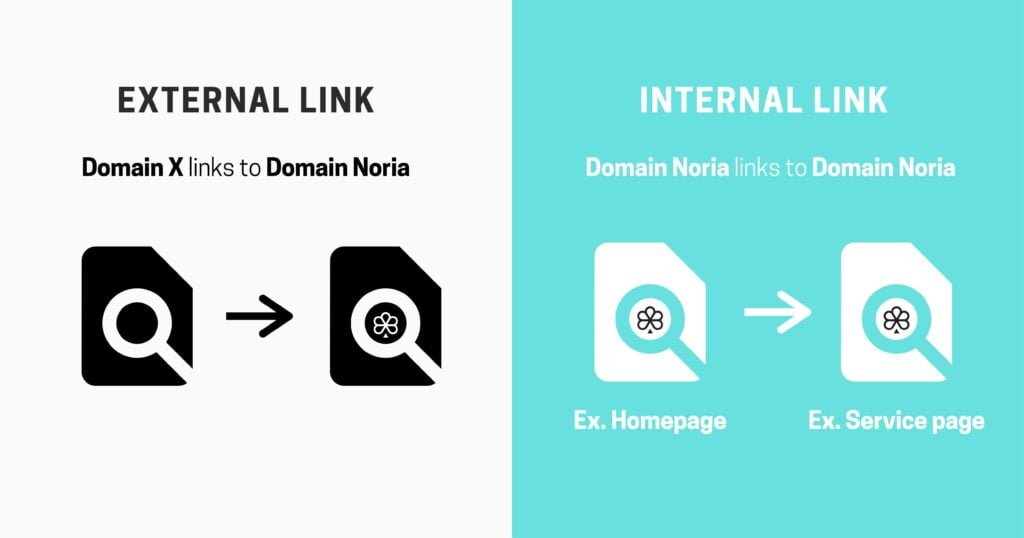
An internal link refers to the relationship going from a given page on a particular domain to a different page sharing the same domain. It’s a link that is mainly used in the primary navigation.
The links are applied for three reasons:
• Internal links help to spread ranking power or link equity around websites
• They make it easier to establish information hierarchy on the blog
• The links make it possible for users to navigate the blog or website easily
2. External Links
External links refer to the hyperlinks used to point to outside domains, other than the source. Simply put, when another site links to your blog, this is known as an external link.
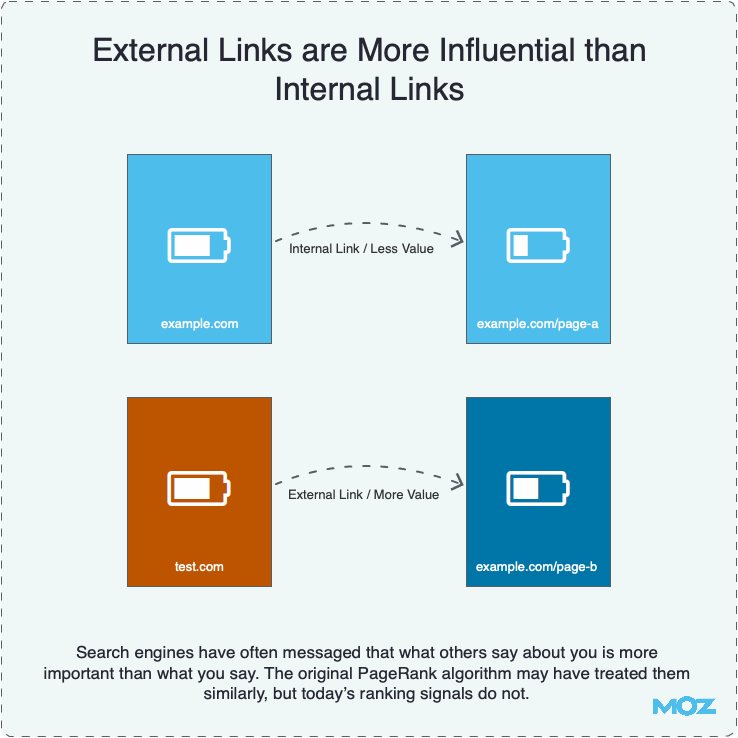
Likewise, if your blog links out to a different blog or site, this is also referred to as an external link. These types of relationships are deemed essential for two reasons:
1. Relevancy: Outbound links supply relevancy clues that are very valuable for Google and other search engines.
2. Popularity: According to the search engineers at Yahoo, traffic is a messy and challenging metric to measure accurately. On the other hand, external links are an easier and more stable metric for search engines to measure.
How to Get Backlinks
1. Natural Links
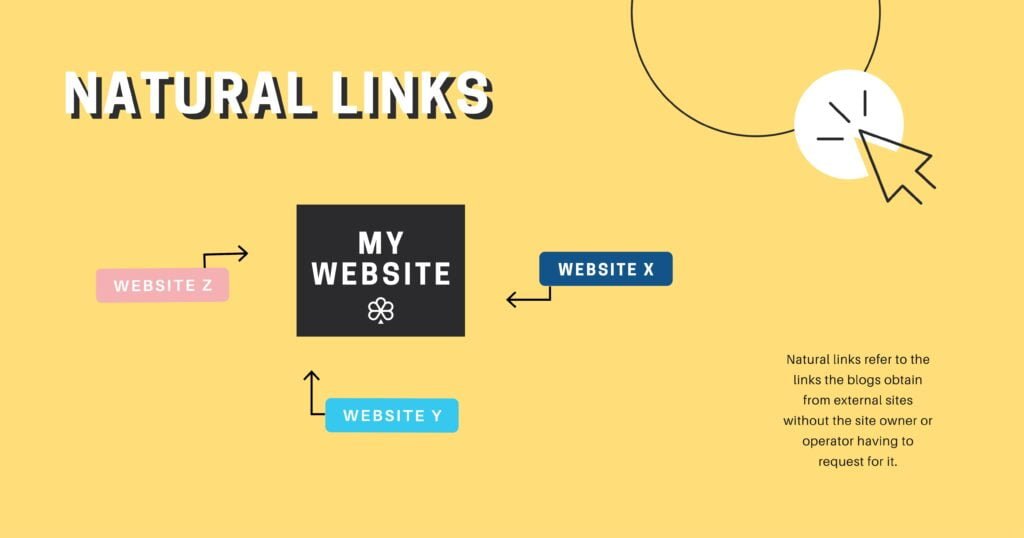
Natural links refer to the links the blogs obtain from external sites without the site owner or operator having to request them. In short, your website must have great content to get this link. You can think of natural links a bit like “word of mouth” in real life. Other websites link to you simply because they genuinely like your content and want to recommend it to their readers.
That’s why search engines see natural links as one of the strongest signals of quality. When another site links to your website or post, it implies your content is top-notch and is something the owners would like to feature. Some blog owners may also send readers to your blog because they firmly believe that it has content beneficial to their readers, which is worth sharing with others.
What Are the Advantages of Natural Links?
Traditional link building and natural link building both offer varied benefits. For natural links, some of its advantages include increased brand visibility, more traffic, and better rankings. Nevertheless, certain benefits make it possible for natural links to easily outshine others. They include:
• Confidence:
Nothing makes a website owner more proud and confident in their work than discovering that their content has attracted 100% natural links. It’s likely to make you double your SEO efforts.
• Industry Recognition:
Your brand becomes more visible whenever the website gets mentioned in industry publications.
• Relationship Building:
As you start to gain natural links, you get presented with unique opportunities to begin conversations with industry insiders and influencers. The conversations can, with time, lead to better relationships in the future.
• Social Shares:
Getting a high number of shares on social platforms and creating content capable of attracting natural links are closely related.
• Exponential Link Growth:
A blog that receives lots of natural links from renowned industry sites makes it possible for you to get additional natural links from leading blogs in your niche.
2. Manually Obtained Links
A manually obtained link refers to a link that you acquire by applying manual efforts. What does this mean? For you to get such a link, you will need to put in some time, focus, and energy. It involves getting in touch with other bloggers and website owners to request them to link back to your page and, where possible, even feature it.
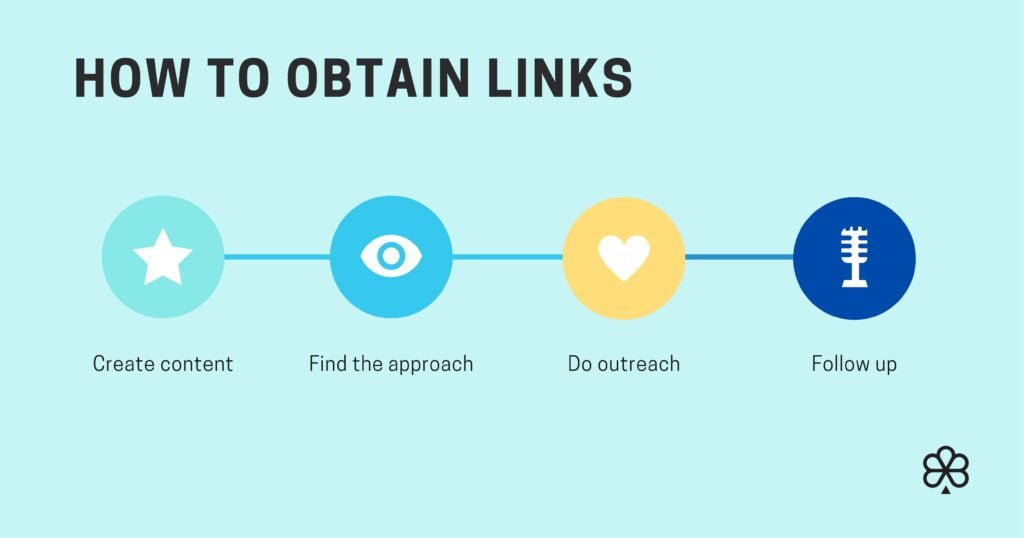
Manual link building is a common strategy applied by small businesses in their link-building strategies. The reason they do it is that they are still new and unknown in the industry. For your site to get links using this strategy, you will need to demonstrate to other businesses and bloggers that the content you have is worth featuring and sharing. Remember that the sites you want to feature on will need to be relevant to your industry. If they are not, the link provided may not have much value, let alone any authority.
3. Self-Created Links
Of all the links discussed above, self-created links are usually the least valuable for SEO and can even be risky if they look spammy. As the name suggests, a self-created link is a link you place yourself, for example, in low-quality directories, forum signatures, or comment sections, rather than something another site has chosen to add because they value your content. When these links are overused or clearly added just to manipulate rankings, search engines may ignore them or treat them as a negative signal.
As you can see from the different types of links described above, there exist both good and bad backlinks. The good backlinks refer to links that other people have created. Bad backlinks, e.g., the self-created links, are those that website owners have created. Such links come in varying forms, such as a backlink to comments on a blog or adding a backlink to a forum.
Conclusion
Now that you have learned about the varied kinds of links that matter to SEO and how they work, it’s time to start building them correctly and efficiently. If you find that link building is too time-consuming or complex, you can rely on our team at Search Studio to acquire high-quality backlinks for you. We use ethical, white-hat link-building strategies that focus on long-term results. Learn more about our link-building services and see how we can help.